
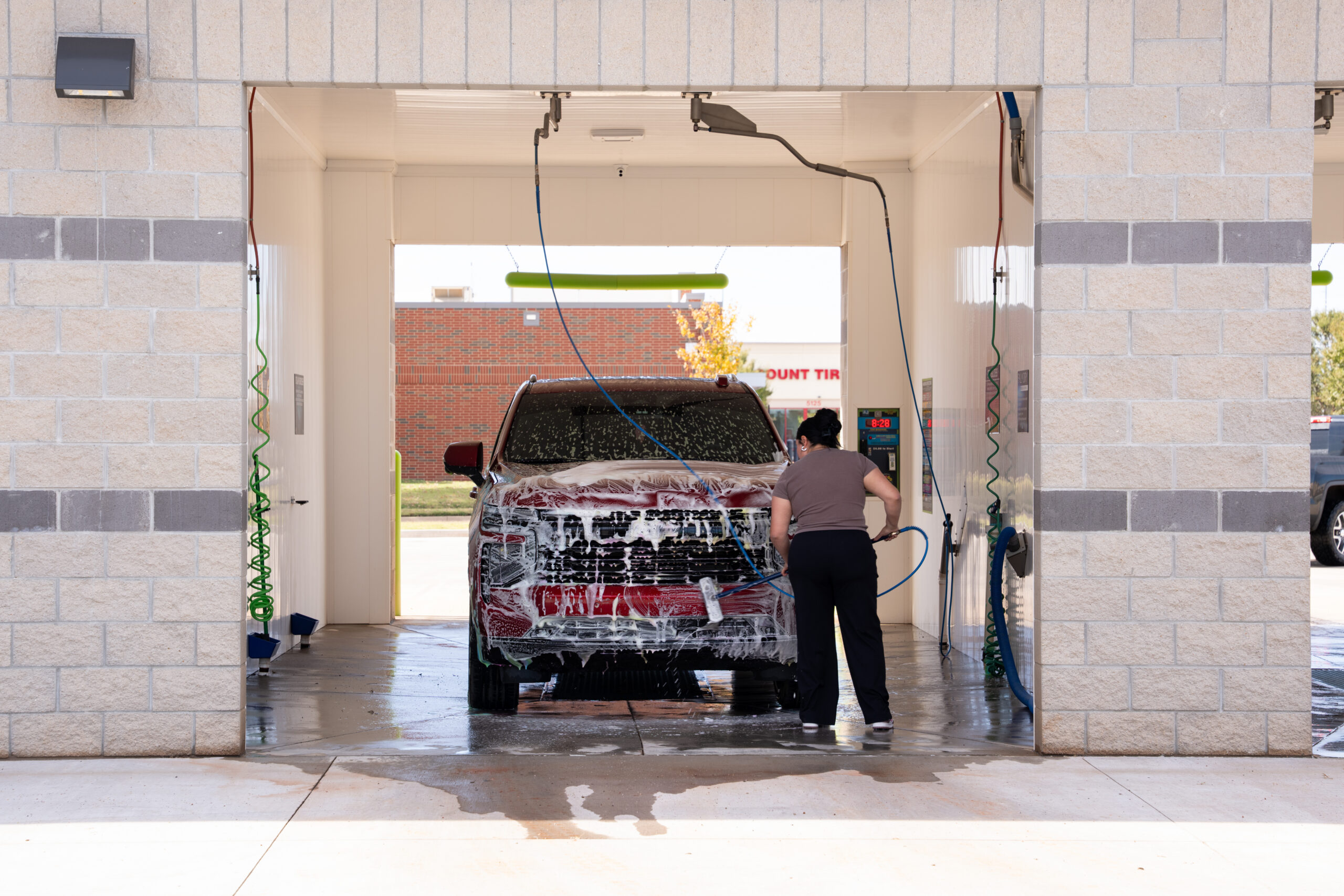
Looking Intently at Your Customers
Why self-serve car wash customers matter more than ever.
Understanding self-serve car wash customers means looking beyond “anyone with a dirty car” and seeing specific needs, habits, and comfort with technology. When you design bays, signage, pricing, and promotions around real customer types, you increase throughput, satisfaction, and the money each visit generates.
Self-serve is having a moment. According to the International Carwash Association’s 2025 PULSE survey for Q3, 17% of car wash customers say self-serve is their most-used option, up from 13% in 2024 and 12% in 2023. That steady climb shows a growing audience that still values control, flexibility, and a personal touch.
Industry reporting also highlights renewed investment in self-serve sites: operators are upgrading bays, adding in-bay automatics, introducing memberships, and modernizing payment to match changing customer expectations. A feature in CAR WASH Magazine describes investors acquiring older locations and seeing strong returns simply by reinvesting in appearance, signage, and customer-friendly tech.
For an independent operator, the pain point is clear: you see lots of different people at your wash, but it’s hard to know how to design one site that works for all of them. If you aim everything at a single “average” driver, you risk confusing novices, boring enthusiasts, and frustrating busy professionals.
By segmenting your customers and connecting those segments to concrete decisions — signage, payment, promotions — you build a self-serve experience that feels personalized without adding staff. One owner who reworked signage and added contactless payments for time-pressed visitors reported faster bay turnover during weekday peaks and an uptick in repeat business.
Five common self-serve customer types at your wash
Most self-serve locations attract a familiar mix of personalities. Naming these self-serve car wash customer segments helps you and your team think clearly about what each person needs from the experience, beyond just soap and water.
First is the Busy Professional, like the realtor hustling between showings. They need a quick, predictable wash on the way to a meeting. They value clear instructions, fast payment, and not having to get out of the car hunting for quarters. For this segment, time is the main currency.
Next is the Auto Enthusiast — the person with a cherished classic or sports car who insists on washing it themselves. They may know more about detailing than your average customer. They want control over chemicals, pressure, and cycle timing. One operator discovered this group was driving off-peak revenue by monitoring surveillance and noting a cluster of enthusiasts visiting late evenings.
Then there’s the Service Business Owner with a van or small fleet. For them, the wash is part of their brand; they care about consistent results, convenient hours, and maybe receipts for each visit. A local HVAC contractor, for example, might stop by weekly, creating reliable recurring revenue if you make it easy.
You’ll also see the Outdoor Enthusiast — off-roaders, campers, boaters — arriving with thick mud, sand, or salt. They need long rinse cycles, accessible trash cans, and powerful vacuums. Their visits may be less frequent but higher ticket, especially after weekends or storms.
Finally, the Budget-Conscious Washer prefers self-serve because they can control spend to the second. They will notice every price increase, but they’re loyal when they feel they’re getting honest value. ICA’s research on price versus value shows that transparent pricing and perceived fairness are now core drivers of satisfaction for this group.
Designing instructional signage for every skill level
Clear, friendly signage is the cheapest way to make self-serve car wash equipment feel simple, even for first-time users. Good signs reduce operator frustration, protect your equipment, and improve wash quality for novices and experts alike.
Start by assuming every new customer has never used your bay before. At the entrance, a single, large “How to Get the Cleanest Car” sign can walk through a basic three- or four-step process: pre-soak, high-pressure soap, foam brush, rinse, and optional extras. Use short phrases, big fonts, and icons so a driver can understand it in about five seconds.
Inside each bay, reinforce these steps with numbered, color-coded panels that match your selector dial. For example, make PRE-SOAK blue on both the dial and the sign, then use a blue bar to show the ideal time to spend in that step. One operator who color-coded steps reported fewer mid-wash panic moments and fewer support calls.
Add “pro tips” on the wall or vacuum islands that speak to different customer types: “For muddy trucks, start with a long pre-soak” or “For vintage cars, reduce pressure and stand farther back.” These micro-lessons help the Outdoor Enthusiast and Auto Enthusiast feel understood rather than forced into a generic, one-size-fits-all process.
Finally, use small QR codes near the payment station or in each bay that link to a short video walkthrough. An article on modernizing self-serve sites from Professional Carwashing & Detailing notes that simple digital education tools increase customer comfort with both new equipment and payment technology.
Aligning payment and app technology to each customer type
Modern payment and app tools let you serve self-serve car wash users with very different expectations around control and convenience. The key is to offer choice without creating confusion at the pay station.
Busy Professionals want to tap and go — ideally without digging for cash or coins. Installing tap-to-pay readers and clear “Tap Here to Start” signage removes friction. Some operators report that after adding contactless payment, they saw both a higher average spend per visit and fewer abandoned starts during busy times.
Auto Enthusiasts often appreciate fine-grained control. A mobile app that tracks time spent in each bay, shows running totals, and offers premium options — like ceramic sealants — can turn their extended sessions into higher revenue while making them feel empowered rather than rushed.
Service Business Owners and fleet operators benefit from managed access. Fleet accounts or stored-value cards let them authorize drivers, cap spend, and download reports. Tools like loyalty apps or specialized fleet programs can convert occasional visits into predictable weekly or monthly usage.
Budget-Conscious Washers value visibility. Display a running timer and spend counter so they can keep costs under control, and consider app-based bonuses like “wash five times, get a bonus credit.” Research highlighted in CAR WASH Pulse (CAR WASH Pulse) shows that transparent pricing and loyalty rewards strongly influence return visits.
The goal isn’t to force everyone into one digital path. It’s to provide a ladder of options — cash, tap-to-pay, app, membership — mapped to your main customer segments, then explain those options clearly in signage and on your website.
Marketing campaigns tailored to self-serve customer segments
When you know your self-serve car wash customer profiles, your social posts, emails, and on-site promos can speak directly to real people instead of a generic “driver.” That emotional recognition is often what nudges someone to choose your wash over a competitor.
For Busy Professionals, build campaigns around speed and reliability. A weekday “10-Minute Clean-Up” promotion with before-and-after photos of work vehicles or realtors’ cars shows you understand their pressure to stay presentable. One operator saw weekday morning volume climb after leaning into this message on social media and local digital ads.
Auto Enthusiasts respond to pride and control. Feature customer cars on your Instagram or Facebook, share “detailer-level” tips, and spotlight premium options like high-foaming soaps or spot-free rinse. A monthly “Enthusiast Night” with discounted extras can turn off-peak hours into a community event.
Outdoor Enthusiasts can be reached with seasonal campaigns: “Mud-Off Mondays” after weekend adventures, or winter salt-removal reminders. Use real images of trucks, ATVs, and trailers in your marketing so they can literally see themselves at your wash.
For Budget-Conscious Washers and small Business Owners, emphasize value and predictability. Promote loyalty programs, multi-vehicle or fleet discounts, and clear, simple pricing charts. ICA’s research on consumer value perception (Pulse Report Q1 2025) underscores that when people feel they’re getting fair value, they are more likely to become repeat customers.
The thread through every campaign: show specific people in specific situations using your self-serve bays successfully. That makes new prospects “identify into” your wash before they ever arrive.
Turning customer insights into higher revenue per bay
Segmenting self-serve car wash customers is only useful if it drives daily decisions — what you invest in, how you staff (if at all), and which upgrades you prioritize each year. Treat customer understanding as an operating tool, not just a marketing exercise.
Start by observing who’s actually using your bays today. Keep a simple tally sheet for a week: note vehicle type, time of day, and obvious cues (company logos, mud, high-end sports cars). Even a rough count can reveal patterns, like a heavier business crowd on weekdays and more enthusiasts and outdoor users on weekends.
Next, map one or two improvements to each key segment: clearer “quick wash” instructions and tap-to-pay for Busy Professionals; extra lighting and premium chemical options for Auto Enthusiasts; fleet or app-based billing for Service Business Owners; longer pre-soak explanations and heavy-mud tips for Outdoor Enthusiasts; and transparent timers and loyalty rewards for Budget-Conscious Washers.
Track the impact. Watch average ticket size, bay time, and repeat visits over a few months. Operators who consistently reinvest in segment-specific upgrades — better signage, new payment choices, refreshed bays — report stronger revenue growth and higher net operating income compared to those who simply maintain equipment.
As recent coverage of the self-serve segment in CAR WASH Magazine notes, sites that are “programmatically reinvested into” capture a growing share of a market that now counts tens of thousands of locations nationwide. By knowing exactly who you serve and designing for them, your self-serve wash can move from merely functional to a reliable, scalable asset in your portfolio.
